The field of orthopedics is gaining new heights year by year with continuous advancements in its Orthopedic Implants and Instruments, machines, and techniques. In this post, we will also be talking about one such advanced surgical technique that is known as arthroscopy.
Arthroscopy is a low-impact surgical method used to perform orthopedic procedures with minimal invasion. It has several advantages over conventional surgical techniques. Let us have look at the procedure in detail.
What is Arthroscopy?
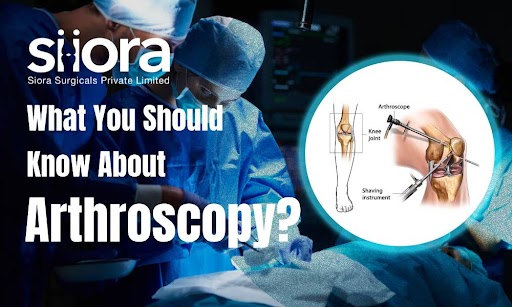
Arthroscopy is a procedure that is used for the diagnosis and treatment of joint problems. This procedure involves inserting a narrow tube with a video camera attached to it via a small incision in the affected joint. The camera shows clear pictures of inside the joint hence, the surgeon can precisely perform the procedure.
One major benefit of this technique is that it allows the surgeon to see inside the joint clearly without needing to make a large incision. But one thing that you should know here is that arthroscopy cannot be performed on all patients, as the surgeon decides whether this procedure will be feasible or not. Special small-sized surgical instruments are used for this procedure.
Why Arthroscopy is Done?
This technique is recommended for musculoskeletal problems when non-surgical techniques like splints, casts, or medications fail to provide relief. Arthroscopy is used to diagnose and treat a wide range of joint-related issues. They may include:
- Knee problems
- Shoulder problems
- Elbow problems
- Ankle problems
- Hip problems
- Wrist problems
As also said above, the decision to perform arthroscopy will be taken after considering certain factors. This is because the procedure is not feasible for all patients.
Which Types of Conditions can Arthroscopy Treat?
Here are some of the conditions that can be treated with arthroscopy:
- Inflammation of the synovium of the shoulder, elbow, wrist, knee, or ankle
- Rotator cuff tear
- Impingement syndrome
- Recurrent shoulder dislocation
- Anterior Cruciate Ligament tears
- Injury to cartilage
- Arthritis in the foot and ankle
- Frozen shoulder
- Loose bone fragments in the joint
- Carpal tunnel syndrome
- Ganglion cysts
What Are the Advantages of Arthroscopy?
There are several advantages of arthroscopy over conventional orthopedic surgeries. Let us have a look:
- Only minor incisions are required in arthroscopy unlike a big one as in conventional methods
- Less tissue damage during surgery ensures faster recovery
- The patients who undergo arthroscopy tend to get early discharge when compared to those with conventional surgical techniques
- Less post-surgical pain is experienced after arthroscopy
- Minimal blood loss is experienced
- Minimal scarring will be there after arthroscopy
What Are the Risks Associated with Arthroscopy?
There are certain risks associated with all types of surgeries and hence, there are some with arthroscopy as well:
Nerve or Tissue Damage
It is seen that the movement of tiny instruments in the joints can cause damage to joint structures.
Infection
The risk of infection is with all types of invasive surgeries and similar is the case with this procedure as well.
Blood Clotting
Not so common, but arthroscopy carries a risk of formation of blood clots in legs or lungs.
To explore the latest and most advanced technologies in the orthopedic industry and many other medical sectors, visit the Florida International Medical Expo in Miami from 11 to 13th June 2025.

