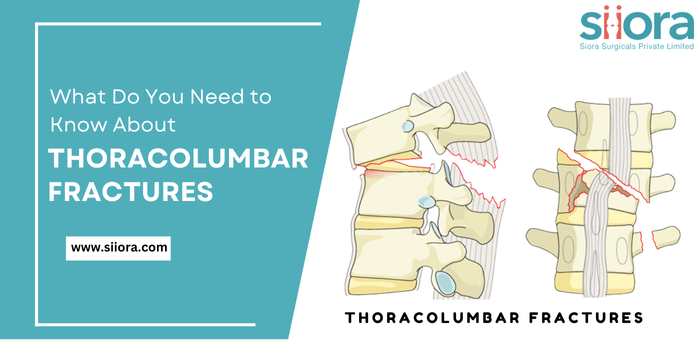
Thoracolumbar fractures happen in the mid-to-lower back. The most common injury site is between the 11th thoracic and 1st lumbar vertebrae, where the rigid upper back meets the flexible lower back. The cause decides how severe the fracture will be and what will be its pattern. Well, fracture generally occurs because of high-energy trauma. Severe cases of the condition require surgery using spine implants and instruments.
To get an international standard quality range of orthopedic devices like Herbert bone screw or hand fracture implants, find an experienced orthopedic implants company.
In this post, we will be having a quick look at thoracolumbar fractures along with the diagnosis and treatment.
What Are the Different Types of Thoracolumbar Fractures?
Some of the common types of fractures that can affect the thoracolumbar region of the spine include:
- Compression fractures
- Burst Fractures
- Chance Fractures
- Fracture/Dislocation
What Are the Causes of Thoracolumbar Fractures?
Spinal fractures most commonly occur because of trauma that includes automobile accidents, contact sports injuries, falling from a height, and violence. Besides this, people suffering from osteoporosis and other bone-related conditions are also at high risk of getting thoracolumbar fractures. If the trauma is severe, it can also cause damage to the spinal cord and neurologic structures. Such cases are devastating and the main reason behind that is they are irreversible and permanent.
What Are the Symptoms?
People suffering from thoracolumbar fractures may complain of:
- Back pain and stiffness
- Reduced lumbar range of motion
- Severe back pain may occur because of other injuries
- Swelling and bruising in the injured area
- Loss of strength and sensation in the case of spinal cord injury
- Numbness or weakness in the legs when the spinal nerve is severely compressed
- Abdominal pain and distention may be experienced when injuries to internal organs are there
How Thoracolumbar Fractures Are Diagnosed?
Radiographic examinations are a must to correctly diagnose the fracture. Here is what the healthcare service provider may suggest for the diagnosis:
X-ray Examination
It is most important to detect fractures in the thoracolumbar fractures. For identifying the type, location, and severity of the fracture, other radiological examinations may be suggested.
Computed Tomography (CT-Scan)
A CT scan may be ordered to identify whether the fracture is displaced or non-displaced. Not only this but a CT scan can also confirm whether there is a fracture in the spine.
Magnetic Resonance Imaging (MRI)
An MRI scan can determine if there’s nerve compression or spinal cord damage, and how severe it is.
What is the Treatment?
The severity of the fracture diagnosed will decide the feasible treatment. At first, the healthcare service provider will advise limiting the movement of the spine. Stable fractures can be managed with non-operative methods that include extension bracing and lumbar corsets that provide support to the spine and resist progressive kyphosis.
Severe fractures may need surgery, and the specific procedure depends on the type of fracture. The most common surgeries that may be performed include decompression and instrumental spinal fusion.
Contact Siora Surgicals Pvt. Ltd. for top-quality, CE-certified orthopedic devices, including spine implants. We’re a trusted manufacturer in India. The company is planning to establish itself as a leading supplier for orthopedic implants in Argentina.
 Orthopedic Implant Company