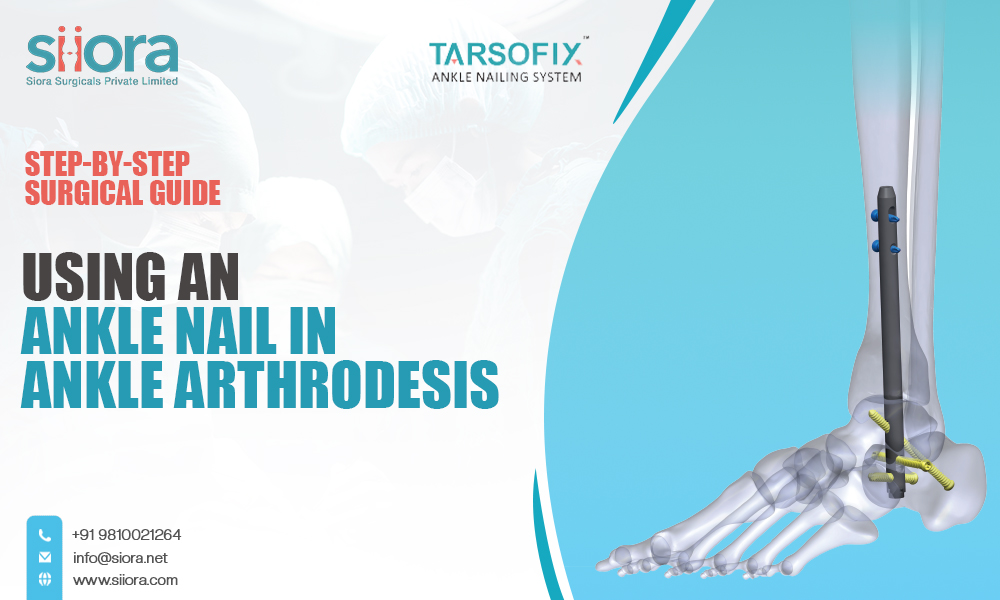
When it comes to fusion surgery for the ankle, using an intramedullary ankle nail is a technique that orthopedic surgeons increasingly rely on—especially for those with disabling arthritis or severe trauma. Imagine a patient who’s grappled with persistent pain for months, walking with a limp and needing frequent rest breaks. After exhausting other options, they arrive at surgery day, hopeful for lasting relief.
Getting Ready in the Operating Theatre
On the day of surgery, the team checks the patient’s details, reassures them, and helps them onto the operating table. The patient is laid in a supine position; there is light conversation with anesthesiology expert, as monitors and a fluoroscopy machine are brought in. The operating surgeon uses a marker to outline the major anatomical landmarks—sometimes explaining these steps to put anxious minds at ease.
The Incision Phase
With instruments prepped and the patient’s leg cleaned and draped, the surgeon makes a measured incision over the lateral side of the ankle. There’s careful dissection; every movement aims to preserve vital blood vessels and tendons. Frequently, a scrub nurse will hand over the retractors, and the surgical team will comment on the anatomy—sometimes marveling at the differences from case to case.
Resecting Bone and Cartilage
Removing the fibula—around two centimeters from the joint—is methodical and deliberate. The surgeon uses a powered saw, checking alignment with their gloved hand. A chunk of fibular bone is set aside for later use as a graft. Once the articular cartilage is exposed, it is scraped meticulously so raw bone edges are revealed. The goal is to create the best possible surface for fusion. Surgeons usually narrate their process quietly for trainees: “Notice how completely we need to remove this—any cartilage left will block healing.”
Nail Preparation and Insertion
Now comes the technical part: positioning a guide wire under live X-ray to ensure a straight line through the calcaneus, talus, and up into the tibia. It’s a balancing act of judgment, eyesight, and imaging skill. Reaming the canal is slow, with a sequence of increasing sizes. If the surgeon is teaching, they’ll describe why restoring a touch of valgus makes walking easier later.
Next, a nail selected for length and thickness slides over the guide wire. The tactile feedback is genuine—not just clinical, but material. Surgeons often pause, check the hardware, confirm with another fluoroscope image, and finally tap the nail gently into place.
Securing with Screws
Now precision matters most. Using targeting jigs, the locking screws are placed through pre-drilled holes. Sometimes a “click” signals perfect engagement with the nail. It’s a moment that invites a sigh of relief—from a new surgeon, it can feel triumphant. X-rays confirm that each screw is perfectly seated; the foot is stable and ready for closure.
Wrapping Up and Recovery
After double-checking that all hardware is in place, the bone graft from the patient’s own fibula is packed around the fusion site. Suture material is selected, the layers are closed, and a clean dressing is applied. Finally, the limb is immobilized in a cast to protect the new fusion.
Life After Surgery
As the patient awakens, the surgeon discusses expectations: “Initially, there’s no weight-bearing. But with good healing, you’re back in regular shoes by six weeks.” Physiotherapy begins soon, focusing on strength and mobility in neighboring joints. Over a series of visits, the patient’s limp fades, their pain improves, and they gradually regain confidence in each step.
Siora Surgicals Pvt. Ltd. is a leading manufacturer and supplier of a CE-certified range of trauma implants & instruments, with a huge global base spanning 50+ countries. The company is also preparing to participate in the premier annual Arab Health Exhibition (WHX Dubai). You can explore Siora’s cutting-edge trauma implants at booth HN7.A71.

